Smartcool Monitoring
A full-stack IoT monitoring platform migrated from a legacy PHP dashboard to a modern React and Laravel architecture. The system supports 600+ connected devices across 5+ sensor metrics in real time, serves 500+ active users, and is powered by 7 Node.js microservices handling data pipelines, background jobs, and third-party integrations.
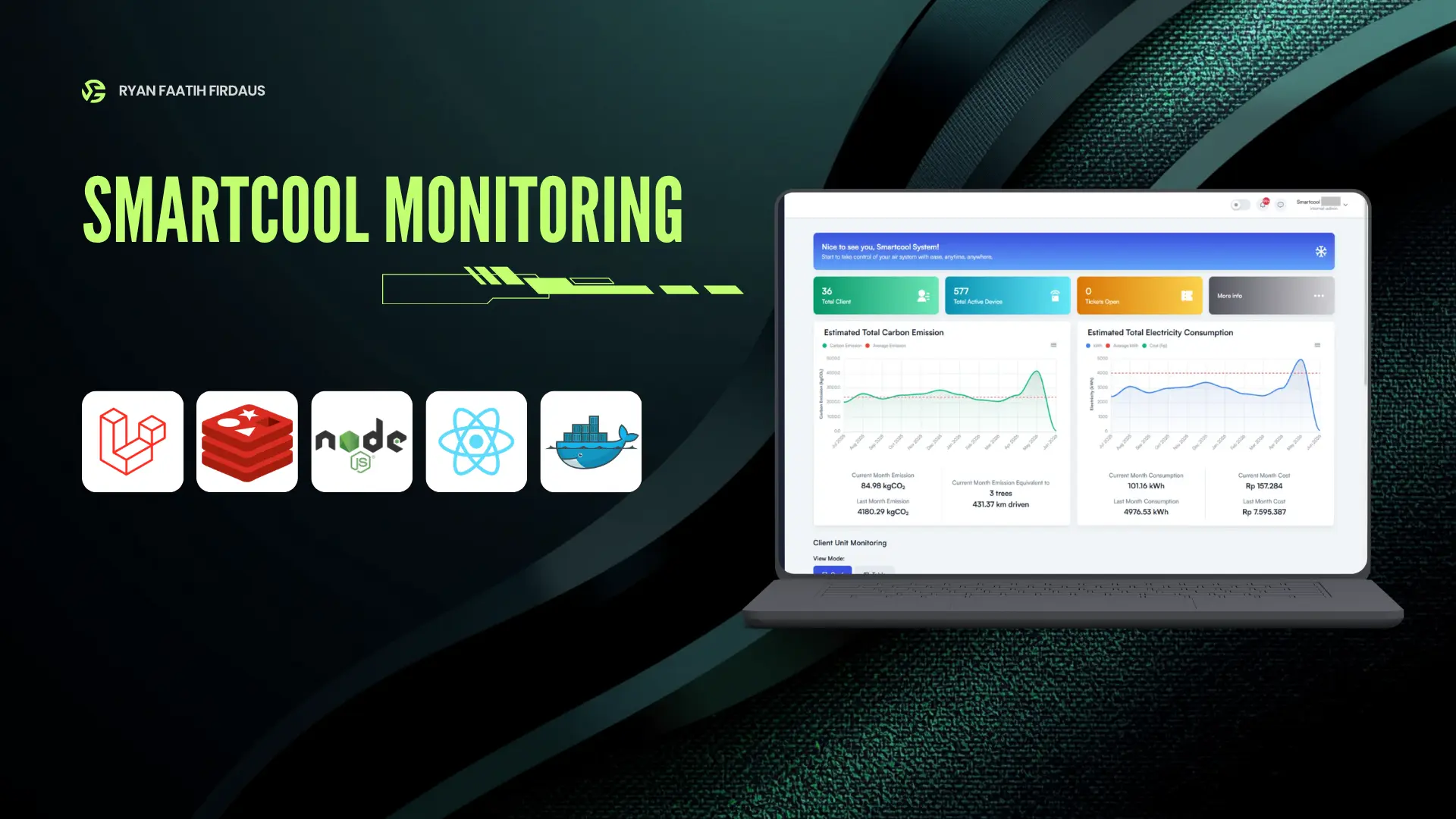
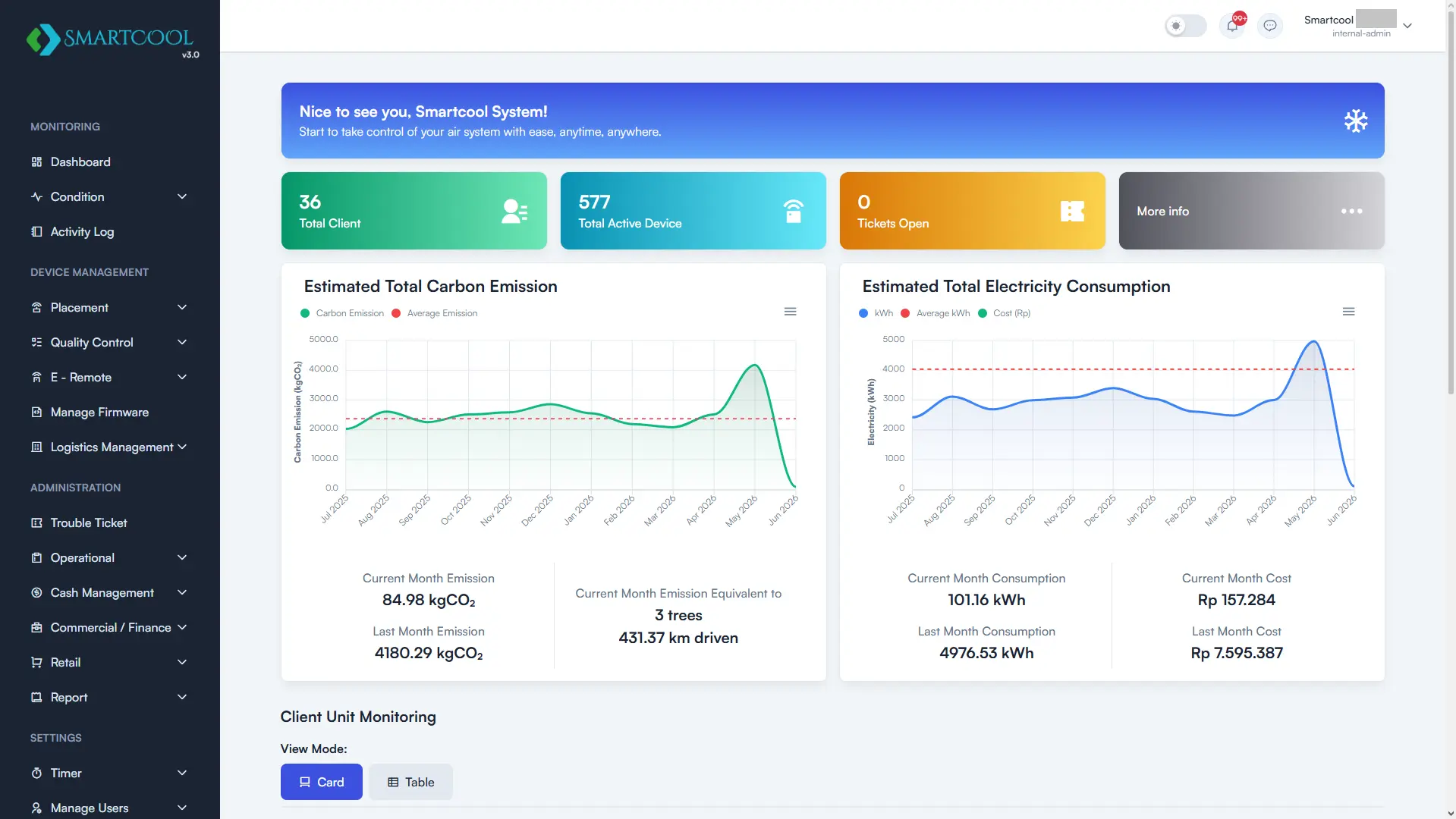
Homepage Monitoring 1
The Challenge
The original system was a legacy PHP-based IoT dashboard that had grown unmaintainable over time. It suffered from high CPU utilization, slow database queries, and a tightly coupled architecture that made adding new features risky. The business needed a stable platform capable of scaling to hundreds of connected devices and users simultaneously.
We migrated the front end to React and the back end to Laravel, redesigned the database schema, and introduced Redis caching to address memory and query bottlenecks. Separately, a real-time telemetry layer was built using 7 dedicated Node.js microservices, each responsible for a distinct concern — from data ingestion and processing pipelines to external system integrations and payment handling via Midtrans.
System Architecture
IoT Device Layer
600+ connected devices stream live telemetry across 5+ sensor metrics. Node.js microservices handle ingestion, processing pipelines, and real-time delivery to the front end.
Laravel Back End
REST APIs, third-party integrations, database schema design, and service layers are built in Laravel. Redis caching reduces memory usage by ~75% and accelerates frequent queries.
Infrastructure
Containerized with Docker and deployed on Linux servers via automated pipelines, ensuring consistent environments across development and production.
Key Results
Tech Stack Deep Dive
Laravel
Powers the core back-end: REST APIs, service layers, database schema design, third-party API integrations, and the Midtrans payment gateway. Chosen for its expressive ORM, robust structure, and rapid development cycle.
Node.js
Seven dedicated microservices built with Node.js handle real-time telemetry ingestion, data processing pipelines, background jobs, and integrations with external systems.
React
The front end was fully migrated from legacy PHP views to React, enabling a component-driven UI with live data updates and a significantly improved user experience.
Redis
Introduced as a caching layer for frequent database reads, reducing memory usage by approximately 75% and improving response times across high-traffic endpoints.
Docker
All services are containerized and deployed on Linux servers through automated pipelines, ensuring environment parity and enabling reliable horizontal scaling.